
The other side of a picture hides a parallel world. The two worlds are constantly intertwining and interacting with each other.
- Drama
- Experimental
- Non-narrative

Tag
The other side of a picture hides a parallel world. The two worlds are constantly intertwining and interacting with each other.

A three-act epic about a seven-year-old boy who can’t sleep, thinking about his issues. There are sounds coming from his parents’ room, some loud and disturbing noises. What could that be? A story about childhood, sex and insomnia.

Broad variety of visual styles (stop motion with paper puppets, ink on paper, watercolor, and paint-on-glass) in a tribute to French and Japanese New Wave auteurs of the late ’60s.

It is bitterly cold in the inner city neighborhoods, and yet people come together. I watch them form a line on the horizon. We wait for something to happen. But nothing does. We have come together to witness an event. To participate in a spectacle. To see and be seen.
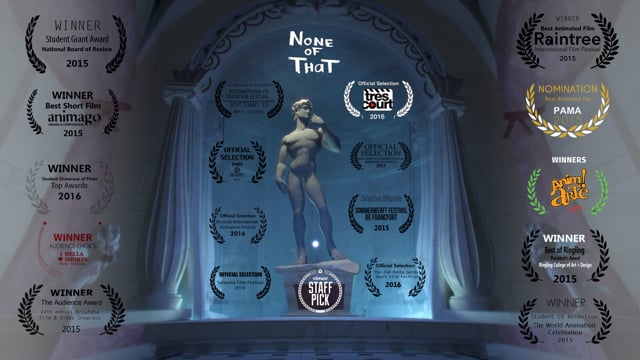
An art museum security guard is on his night patrol when he realizes that a mysterious intruder is censoring all the nude artwork.

A one-eyed has-been TV presenter hides away in a hotel room with his dead sidekick to watch reruns from their better days. “Let’s revive some of our moments now” he says to the corpse in his arms. “It’s OK, I’m just glad you are here.”

A story of a timid boy and woodland girl who are both connected and separated by fear. They develop a strong bond which becomes almighty in their fantasy world. But as friendship turns to love, fear arrives, and has an unexpected form. Overcoming fear and finding a common journey will not be easy. It will be difficult.

An alienated and lonely man goes to take a rest and dreams about the same torment and feeling of inability to bear the burdens of life that torment him even when he is awake. He dreams of his ups and downs, as well as fears which turned into symbols that also came from the rigid everyday reality.

A security guard’s nightly ritual – a Tetris game – is interrupted by unexpected technical issues. One of the surveillance cameras breaks down, and the game sets its own rules.

A zombie movie with more heart than brains.

On a late-night commuter bus, a necklace was stolen. This was followed by a tragic and fatal road accident, and a series of intriguing turn of events which revealed love, hatred, and vengeance. The film climaxes as the bus goes up in flames, burning and glittering against the dark coastal sky.
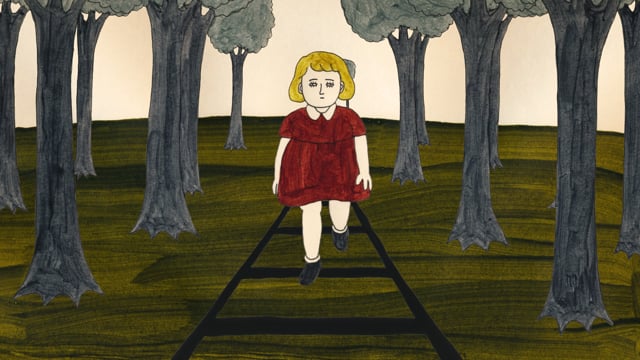
A music video for Nevermen who consists of TV on the Radio’s Tunde Adebimpe, Faith No More’s Mike Patton and Doseone.
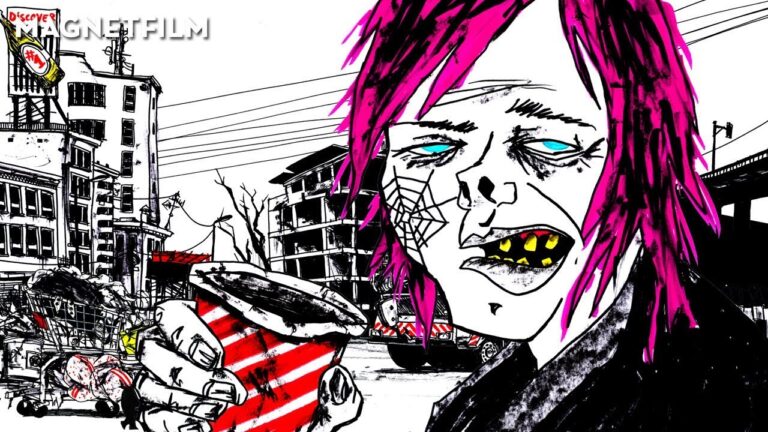
The awkward hero stumbles over a long forgotten piano. Music leads him from his rund down existence out into the city life. There he plays a last funeral march to all the deadbeat figures on the sidewalk.
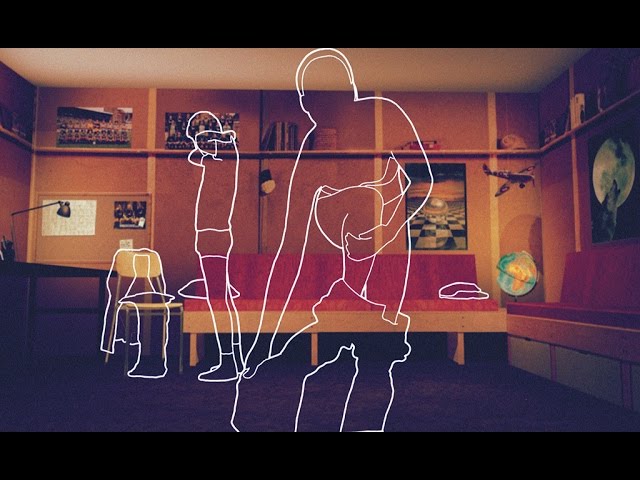
In Never like the first time! four different people tell us, in their own words, what it was like to lose their virginity. The diverse experiences recounted in the four different animated stories, some tragic and some comic, are told by both the teenagers and the old people that appear in the stories and they all have one thing in common – it is ”never like the first time!” The people behind the voices remain anonymous and they explain sincerely how significant losing their virginity was to them.

Somewhere in Eastern Europe due to an accident in a laboratory, the hero gains superpowers that he does not want. The hero does not want to be a superhero, to save the world from villains, he wants to live as before without changing anything. The situation is complicated by the fact that while he gains the awareness of his power, it causes problems in his everyday life. While he is stuck in the elevator, he meets a girl who likes him and wants to help him.
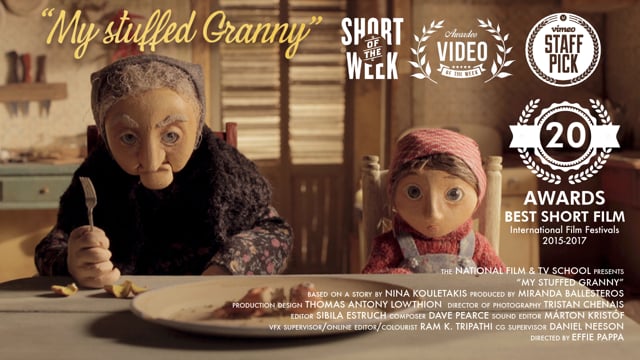
Little Sofía loves her grumpy granny: even though she is always hungry and eats what little food they can buy. Her pension is the only thing keeping her and her father alive. To what extremes will they go to once granny is no more? Based on a story by Nina Kouletakis.

A film about the relationship between a young woman striving for professional success and her eccentric brother. The main character is a workaholic who devotes her entire life to her job. She believes that this is the only right path and, even though it does not make her happy, she stubbornly sticks to her position. Her older brother has a completely opposite attitude to life and, seeing how his sister lives, tries to convince her to change. He often behaves eccentrically, embarrassing his sister in front of her colleagues and slowly making her life miserable. At some point, the sister has had enough of her brother’s insistence, which leads to frequent arguments and eventually to a breakdown in contact.
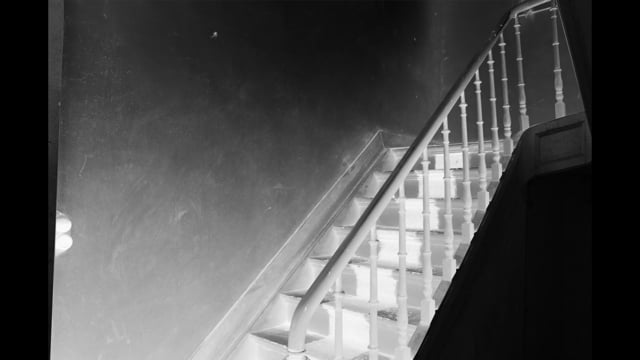
An unoccupied house, a treasure trove of memories for the director, is captured at a major point of change.

Good and evil, utopia and dystopia, narrative and post-narrative collide in a mortal battle to entertain the audience.

My Generation is the final chapter of the trilogy Logorama– Money Time– My Generation. From a deadlock to an hypothetic future, My Generation is a POV shot, from a mysterious vehicle rolling backwards on a wide highway and driving through every great plague of our time materialized by amazing interconnected theme parks: art, big data, sports, religion, sex, politics and finance.